Evaluating Watercolor Sunflower Gnome Clipart for Creative Projects and Commercial Use
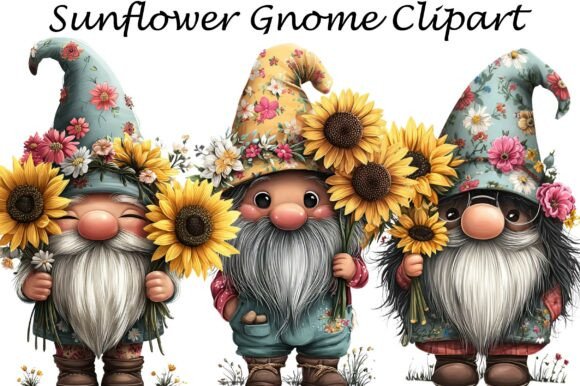
Selecting the right digital assets for seasonal or niche crafting projects requires balancing aesthetic appeal with technical functionality. When researching Watercolor Sunflower Gnome Clipart, creators are often looking for a specific intersection of cottagecore whimsy and botanical realism. This particular style combines the rustic, hand-painted texture of traditional watercolor media with the playful character design of garden gnomes and the vibrant symbolism of sunflowers. Understanding the distinct qualities of this clipart category helps in determining whether it aligns with your current project needs or if an alternative style might serve better.
Defining the Aesthetic and Technical Standards
The primary distinction of high-quality Watercolor Sunflower Gnome Clipart lies in its ability to mimic organic brushstrokes while maintaining clean digital edges. Unlike flat vector art, which relies on solid colors and mathematical curves, genuine watercolor clipart retains the transparency, bleeding, and grain of pigment on paper. This texture is crucial for designs intended to evoke warmth and nostalgia. When evaluating options, verify that the artwork was originally created with physical media or high-end digital brushes rather than being a rasterized filter applied to a standard illustration.
Technical specifications are equally important for professional results. For print-on-demand merchandise or home décor, resolution is non-negotiable. Assets should be provided as 300 DPI PNG files to ensure crisp printing at various sizes. The inclusion of a transparent background is standard but essential; it allows the gnome and sunflower elements to layer seamlessly over different colored fabrics, wood stains, or textured papers without unsightly white boxes. A comprehensive set typically includes around 20 unique variations, providing enough diversity to create cohesive collections across multiple product types without repetitive imagery.
Comparing Watercolor Styles Against Vector and Vintage Alternatives
When deciding on artwork for sunflower or gnome-themed products, it is helpful to compare watercolor styles against other common formats. Each has specific strengths and tradeoffs depending on the end application.
- Watercolor vs. Flat Vector: Vector graphics are infinitely scalable and ideal for large-format signage or embroidery digitizing where clean lines are paramount. However, vectors can sometimes feel sterile or overly commercial. Watercolor Sunflower Gnome Clipart offers emotional resonance and artistic softness that vectors lack, making it superior for stationery, nursery art, and apparel where a handmade feel is desired. The tradeoff is scalability; watercolor files have a maximum resolution limit before pixelation occurs.
- Modern Watercolor vs. Vintage Public Domain: Many creators utilize public domain vintage botanical illustrations. While these are free and authentic, they often feature muted, aged color palettes and may not include whimsical characters like gnomes. Modern watercolor clipart provides vibrant, contemporary color grading and original character designs that avoid copyright ambiguity. If your project requires historical accuracy, vintage is preferable. If it requires marketability and brightness, modern commissioned clipart is the stronger choice.
- PNG Bundles vs. AI Generation: Artificial Intelligence can generate infinite gnome images instantly. However, AI often struggles with consistent character design, coherent hands, and logical flower anatomy. Curated Watercolor Sunflower Gnome Clipart bundles offer intentional composition and consistency across the set. For commercial sellers, human-created art also mitigates the risk of platform restrictions associated with AI-generated content and ensures unique intellectual property.
Practical Applications and Material Compatibility
The versatility of this clipart extends across both digital and physical mediums, though performance varies by substrate. Understanding these nuances prevents wasted materials and ensures customer satisfaction.
Apparel and Textiles
For T-shirts and clothing, the watercolor aesthetic translates exceptionally well to Direct-to-Garment (DTG) printing and sublimation. The semi-transparent nature of watercolor pigments allows the fabric texture to show through slightly, creating a softer hand-feel compared to heavy vinyl transfers. However, for screen printing, the subtle gradients of watercolor can be challenging to separate into spot colors. In such cases, this clipart is best suited for CMYK process printing or simulated process screens. Embroidery requires caution; dense watercolor fills do not stitch well. Use these designs as inspiration for appliqué or choose line-art versions specifically digitized for thread.
Hard Goods and Home Décor
Tumblers, mugs, and palette signs benefit from the high contrast and saturation typical of sunflower motifs. On curved surfaces like tumblers, the organic shape of watercolor splashes helps mask alignment imperfections better than rigid geometric borders. For wooden signs, the transparency of the PNG files allows wood grain to integrate into the artwork, enhancing the rustic theme. Ensure the file resolution supports the physical dimensions of the sign; stretching a 300 DPI image beyond its native size will result in blurriness.
Paper Products and Stationery
This is perhaps the strongest use case for Watercolor Sunflower Gnome Clipart. Planners, stickers, and wall art demand high detail and color fidelity. The 300 DPI standard ensures text remains legible alongside the artwork. For stickers, the irregular edges of watercolor paint create natural cut lines that look intentional rather than jagged. When designing planners, consider using lower-opacity versions of the clipart as background elements to maintain writing space readability.
Decision Factors: When to Choose This Resource
Not every project benefits from this specific aesthetic. Evaluating fit requires honest assessment of your target audience and production capabilities.
Choose Watercolor Sunflower Gnome Clipart when:
- Your audience values artisanal, cozy, or nature-inspired aesthetics.
- You are producing small-batch items or personalized gifts where uniqueness matters.
- The project involves layering over textured backgrounds or colored substrates.
- You need ready-to-use assets with transparent backgrounds to reduce editing time.
- You support independent artists and want to avoid generic stock library fatigue.
Consider alternatives when:
- You require massive scalability for billboards or vehicle wraps (opt for vectors).
- The design must be minimalist or corporate (watercolor is inherently decorative).
- You are doing single-color vinyl cutting (watercolor gradients cannot be cut).
- Budget is zero and commercial licensing is not required (explore public domain).
Licensing and Ethical Sourcing Considerations
Beyond aesthetics and format, the source of the clipart matters for long-term business sustainability. Purchasing curated sets from dedicated creators supports the development of new, unique designs and ensures proper licensing for commercial use. Many free resources restrict commercial application or require attribution, which can complicate product packaging and branding. Investing in premium Watercolor Sunflower Gnome Clipart typically grants broader usage rights for small businesses, including print-on-demand and digital products.
Always review the specific license terms regarding quantity limits, credit requirements, and prohibited uses. Some licenses allow unlimited sales, while others cap units or require extended licenses for certain applications. Clarifying these details upfront protects your business from future compliance issues. Additionally, supporting individual artists encourages the continued creation of niche, high-quality assets that differentiate your products in a saturated market.
Maximizing Value Across Multiple Projects
To get the most return from a 20-file bundle, approach the assets as modular components rather than fixed illustrations. Separate elements can often be recombined to create new compositions. A standalone sunflower might work as a corner accent on stationery, while a full gnome scene serves as a centerpiece for wall art. Mixing and matching elements within the same collection maintains stylistic coherence while expanding design possibilities.
File organization also impacts efficiency. Rename files descriptively upon download (e.g., "SunflowerGnome_BlueHat_300DPI.png") rather than relying on generic codes. Create subfolders for different resolutions or edited versions. Maintaining a clean asset library reduces friction during busy production periods and ensures you consistently select the highest quality version available for each application.
Ultimately, the decision to incorporate Watercolor Sunflower Gnome Clipart should stem from a clear understanding of how its unique properties serve your specific creative and commercial goals. By weighing technical specifications against aesthetic requirements and comparing alternatives objectively, you can select resources that enhance both the quality of your work and the viability of your creative enterprise. Whether for personal enjoyment or small business growth, informed selection leads to more satisfying and sustainable outcomes.